Session 4: Magic Mirror
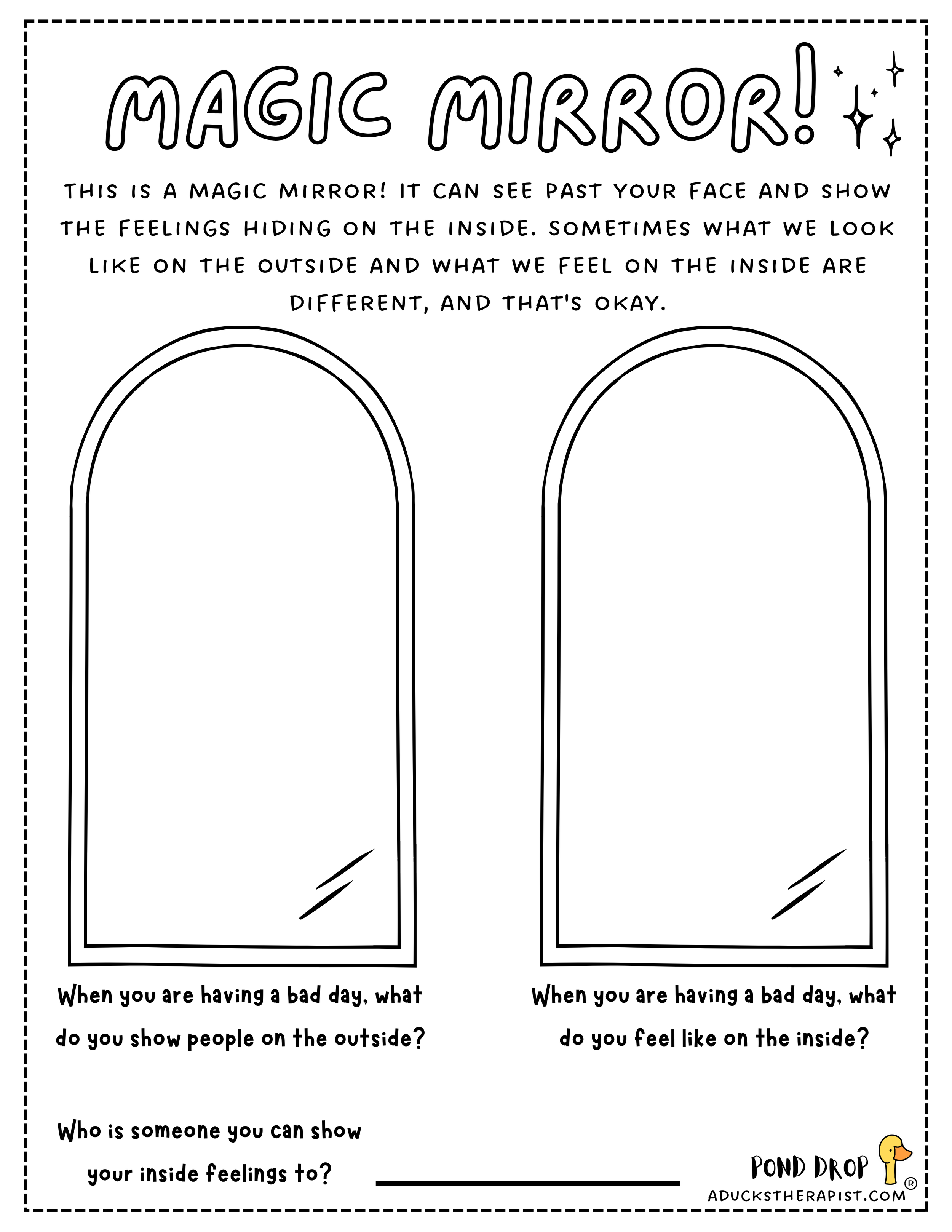
Ages: 6–12 · Time: 45–50 min · You'll need: crayons, a hand mirror (optional), a paper bag or box (optional)
Session goal: The child notices the difference between what they show on the outside and what they feel on the inside, and names a safe person to share the inside with.
Why it helps
Masking is common, and tiring. Many kids learn to hide feelings to fit in, avoid trouble, or protect a parent. Naming the gap is the first step to closing it.
Display rules are a developmental skill. Around ages 6–8, kids learn that you can show one feeling and feel another. That's healthy in small doses. The concern is when nobody ever sees the inside.
Drawing makes it safe. The mirror gives kids distance. It's "what the mirror shows," not a confession.
It builds support. The last question ("Who can you show your inside feelings to?") connects the child to a safe adult, a key protective factor in kids' mental health.
Session flow
Check in (5 min): Stick Figure Check-In. Ask if the figure they circled matches how they feel inside.
Warm up: Mask On, Mask Off (5–10 min). Hold a paper plate or your hand over your face as a "mask." Show one feeling with the mask on (smiling), then lower it to show the real one (worried). Take turns. Talk about why people wear "masks."
Worksheet (15 min). Draw the outside mirror first (what people see on a bad day), then the magic mirror (what you feel inside). Then fill in the safe-person line together.
Bring it to life: Inside/Outside Bag (10–15 min). On the outside of a paper bag, draw or write what people see. Inside the bag, put slips of paper with feelings you keep hidden. The child chooses which slips (if any) to share with you. Let them keep the bag.
Close (5 min): "What's one way someone could tell you need help, even if you're smiling?" End by naming the safe person out loud together.
Questions to ask
"Why do you think you show this on the outside?"
"What would happen if people saw the inside mirror?"
"Is it tiring to keep the inside hidden?"
"Who in your life is good at noticing the inside you?"
"What could you say or do to let your safe person know you need them?"
Therapeutic thoughts
A big gap is meaningful. If the outside looks happy and the inside looks very sad, scared, or angry, the child may be working hard to hide feelings. Get curious: "The inside looks like it's working really hard."
"No one" is an important answer. If a child can't name a safe person, don't move on quickly. Help them find one, even if it's you to start. Consider whether family sessions or school support would help.
Respect what stays private. The point isn't to force them to share. Choosing to keep some feelings private is healthy too.
Watch for masking about home. Kids who hide feelings to protect a parent (a parent who is sad, sick, or overwhelmed) may be carrying adult-sized worries. Explore gently.
Adapting it
Ages 5–6: Use "happy face, sad inside" language and focus on one feeling. You may need to model by drawing your own mirrors first.
Ages 10–12: Talk about friends and social media: "What do people post vs. what do they really feel?"
Groups: Have kids guess what's inside each other's "mask" first. Only share if they choose.
Take-home practice
Show your inside feelings to your safe person once this week. It can be as small as "I had a hard day."