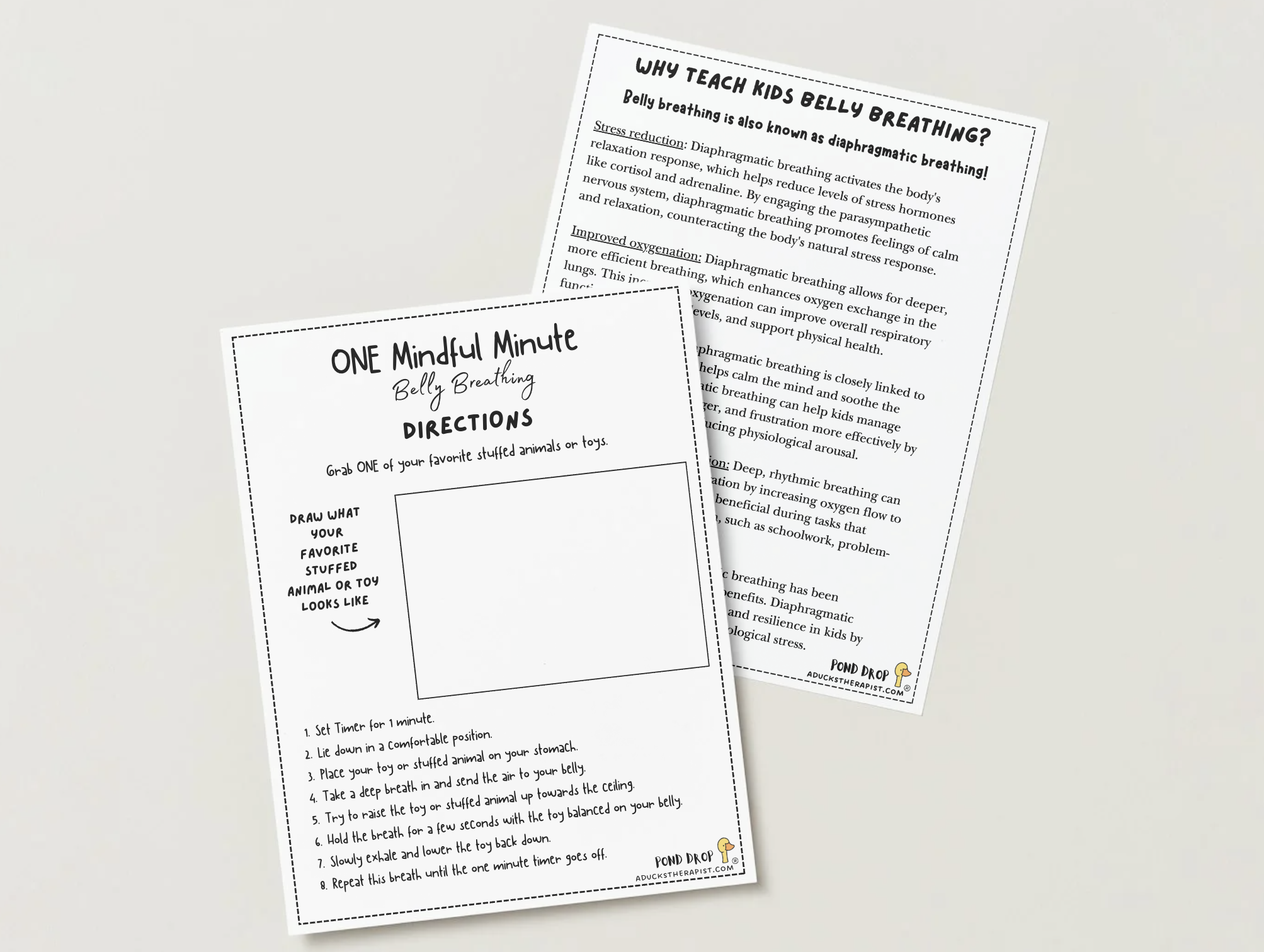
Ages 4–10 · 5–10 minutes · A stuffed animal or small toy, a timer, space to lie down (or a chair)
Kids draw their favorite stuffed animal or toy, then lie down with it on their belly and breathe slowly so it rises and falls for one minute. Page 2 explains why belly breathing helps.
Why it works: "Take a deep breath" usually gets fast, shallow chest breaths from kids. Putting a toy on the belly gives them something to see: when the toy rises, they're doing it right. That turns an abstract skill into a concrete one. Slow belly breathing, especially a long, slow exhale, helps switch on the body's calming response. Practicing when they're already calm is what makes the skill available when they're upset. It's often called "breathing buddies," and it's the same skill parents practice in the Emotion Coaching handout ("Let's take a big breath together").
How to use it
Have them draw their toy first. It builds rapport and makes the toy their "breathing buddy."
Model it yourself before they try.
Practice two or three breaths without the timer. Cue: "Fill your belly like a balloon," then "Slow ride back down."
Set the timer for one minute and breathe together.
Afterward, ask, "How does your body feel now compared to before?"
Send home with caregivers so they can do it with them!
Follow-up questions
"What did you notice in your body?"
"When could your breathing buddy help you?" (bedtime, after a fight, before a test)
"On the Feeling Scale, what number were you before? What number are you now?"
What to watch for
Dizziness or lightheadedness. Slow down and let them breathe normally. Breaths should be slow, not huge.
Discomfort with lying down or closing their eyes. Some kids, especially those with trauma histories, feel unsafe lying down. Offer a seated version with the toy on their lap or a hand on their belly, eyes open.
Wiggly kids. That's fine. Start with 15–30 seconds and build up.
Breath-holding (step 6). Some kids find it uncomfortable or a little scary. Make the hold optional: "Pause for just a second if you want."
Adapting it
Little Ducks (4–5): Try 30 seconds, and count the rises out loud together.
Big Ducks (8–10): Add a count (breathe in for 4, out for 6) and let them run the timer.
Telehealth: Works great. Kids grab a toy at home and you can watch the toy move on camera.
Extend it
Send it home as part of a bedtime routine.
Pair it with the Feeling Scale before and after to show the change.
Invite a parent to do it with their child as part of the Emotion Coaching "This Week at Home" practice.