Stick Figure Check-In
Ages 5–10 · 5–10 minutes · Pencil or crayons
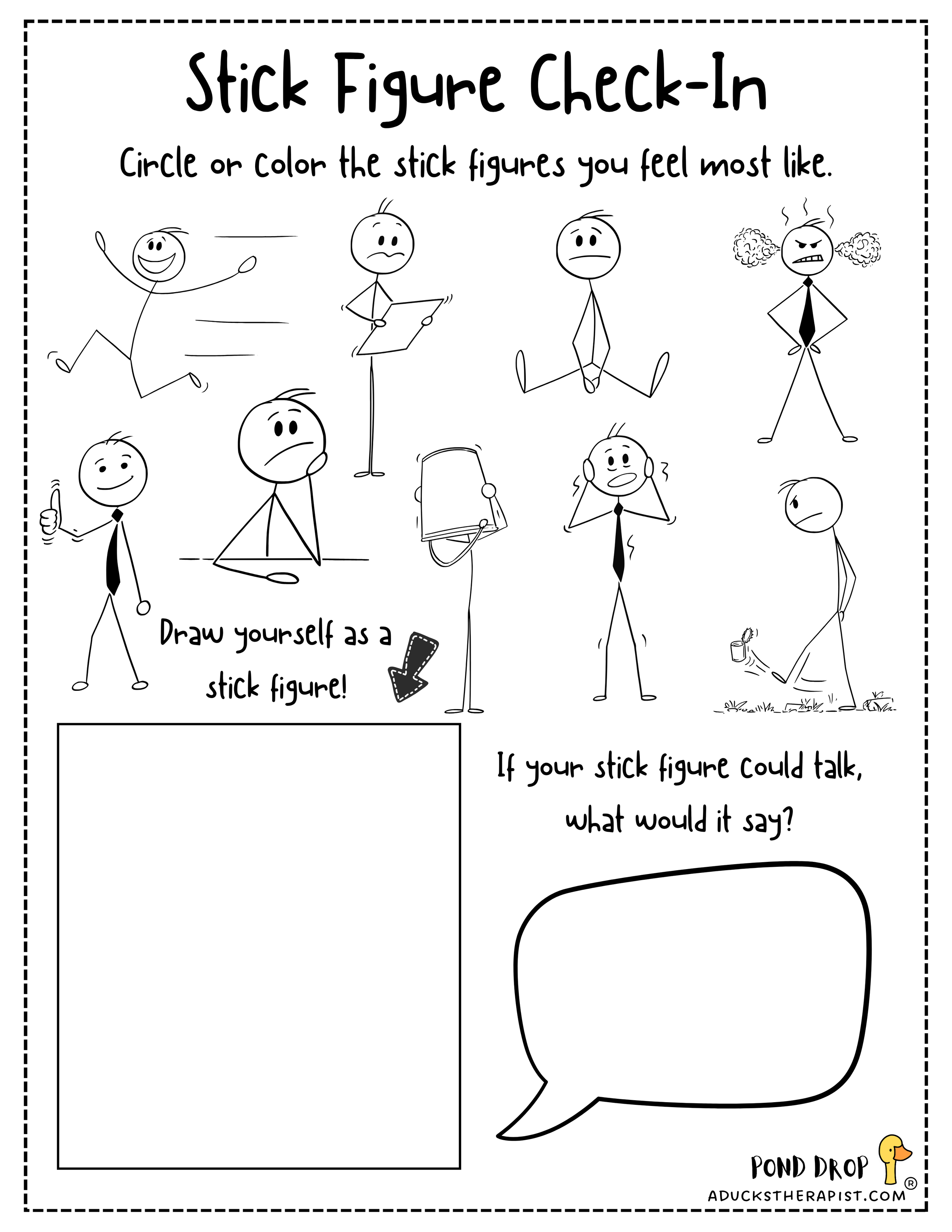
Kids circle the stick figures they feel most like, draw themselves as a stick figure, and write what their stick figure would say.
Why it works: Feelings live in the body before they become words. Pointing to a posture (slumped, stomping, hiding, cheering) lets kids show a feeling they can't name yet. This builds body awareness, which is the first step in noticing feelings early. The speech bubble adds a little distance: it's the stick figure talking, not me, which makes hard things easier to say.
How to use it
Look at the figures one at a time together. Ask, "What do you think this one is feeling?"
Have the child circle or color the ones that feel most like them today.
Invite them to draw themselves as a stick figure.
Fill in the speech bubble together.
Follow-up questions
"What is your stick figure's body doing? Where do you feel that in your body?"
"What happened today that made you feel like this one?"
"Which stick figure would you like to feel like by the end of today?"
"Who would your stick figure want to talk to right now?"
What to watch for
Kids drawn to the bucket-on-head or kicking-a-can figures. Those often mean wanting to hide or feeling frustrated or left out, so gently explore.
A speech bubble that sounds very different from the drawing ("I'm great!" with a slumped figure).
Self-drawings with no face, or very small figures, can be worth a gentle question. Don't read too much into them.
Adapting it
Little Ducks (5–6): Skip the speech bubble, or scribe for them while they talk.
Big Ducks (9–10): Ask them to label each figure with a feeling word first. It's a great vocabulary stretch.
Extend it
Act out the stick figures' poses, then guess the feeling (a movement version of Pictionary).
Ask, "What would this stick figure need to feel better?" to start coping skills talk.
Pair with the Magic Mirror worksheet: outside body vs. inside feeling.