Emotion Pie
Little Ducks version: 5–8
Big Ducks: 8-12
Why it works: A pie shows that we can feel several things at once, and that some feelings take up more room than others. Kids often believe they can only feel one thing at a time. Understanding mixed feelings develops gradually through the elementary years, so this is a gentle way to build it. The Big Ducks question "Would you want to feel any different?" is a solution-focused move: it invites the child to picture a goal without pressure.
How to use it
Read the slices together. Ask the child to color every feeling they have today.
Optional: color more of a slice for a bigger feeling.
Talk about the colored slices, then do the bottom prompt.
Follow-up questions
"Which slice is the biggest today? What made it so big?"
"You colored happy and nervous. Can you tell me about having both?"
"Is there a feeling you have today that isn't on the pie?"
Big Ducks: "If you could make one slice smaller, which would it be? What might help?"
Big Ducks: "What's on your 'things I love' slice? Which of those could help on a hard day?"
What to watch for
Every slice colored, which may signal overwhelm or a kid who wants to "finish the page." Ask which ones are really there.
No slices colored, or only positive ones, when you know things are hard.
For Big Ducks, stressed + tired + anxious together over several weeks. Check sleep, school load, and whether a screener makes sense.
"Tired" is a body state more than an emotion. It's a great clue to ask about sleep and energy.
Adapting it
Younger than 5: Let them explain how they feel and color in the slices for them if needed
Older kids or teens: Have them draw their own pie and size the slices like a pie chart ("30% stressed").
Extend it
Give a fresh pie at the start and end of a session to see if anything shifted. Or each week to track progress
Make a family pie in a parent session: everyone colors their own slice.
Use the yummy/yucky question as a quick rapport warm-up with any new client.
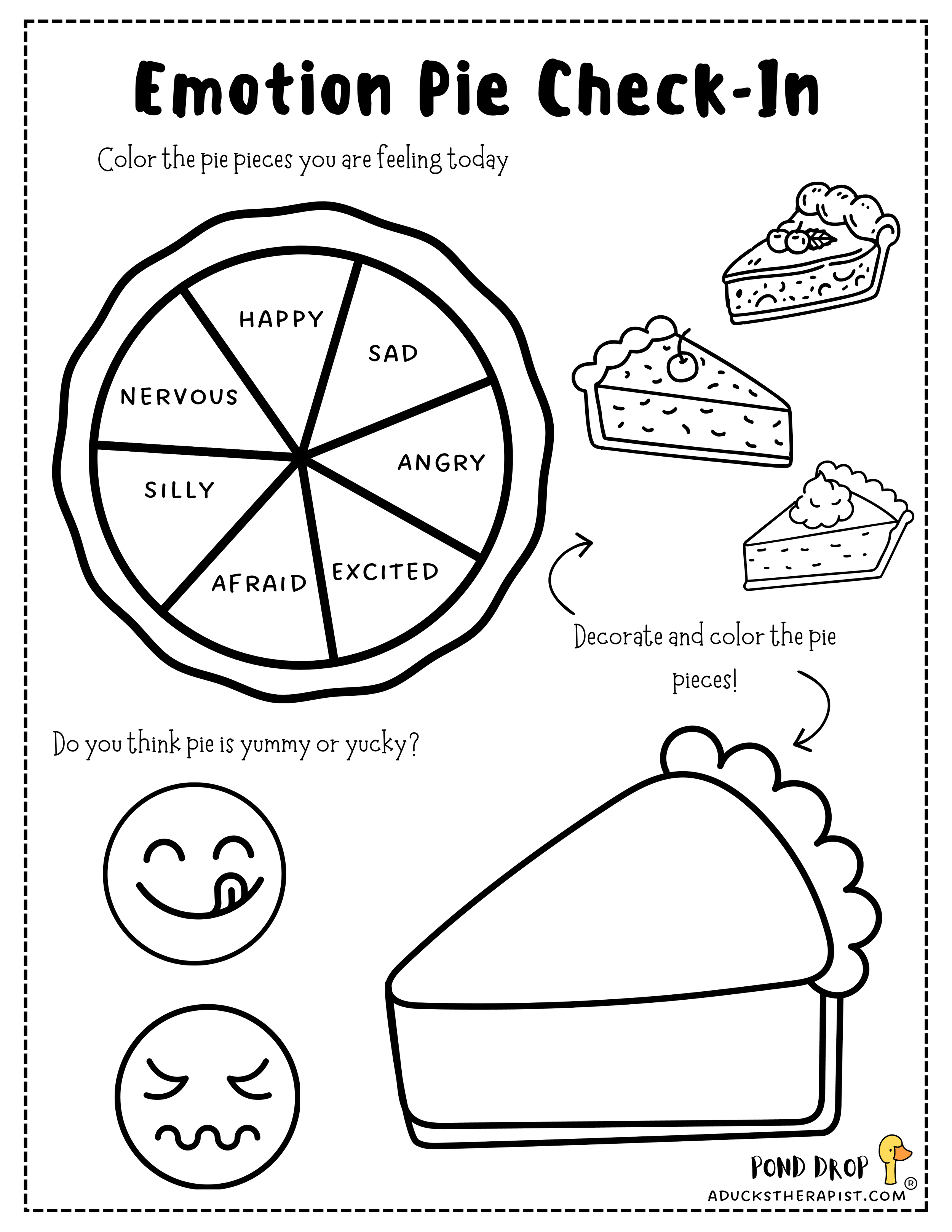
Little Ducks
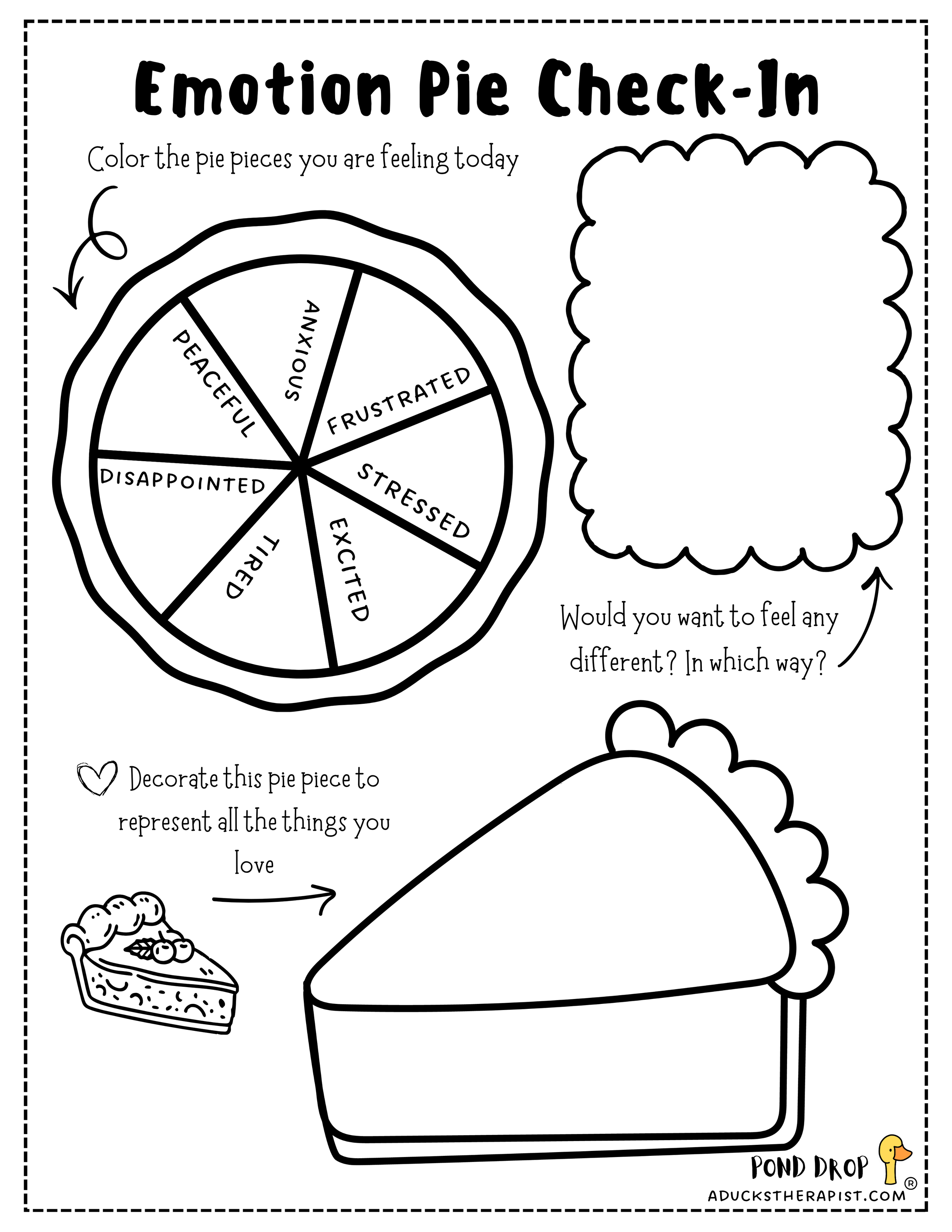
Big Ducks