Pictionary- Telehealth

Download this list and share your screen! Or send it directly to client
Whiteboards we like:
draw.chat
https://www.figma.com/online-whiteboard/
Ages 5–12 · 10–15 minutes · Works on any video platform
You'll need: a free online whiteboard (see above)and the feelings list below
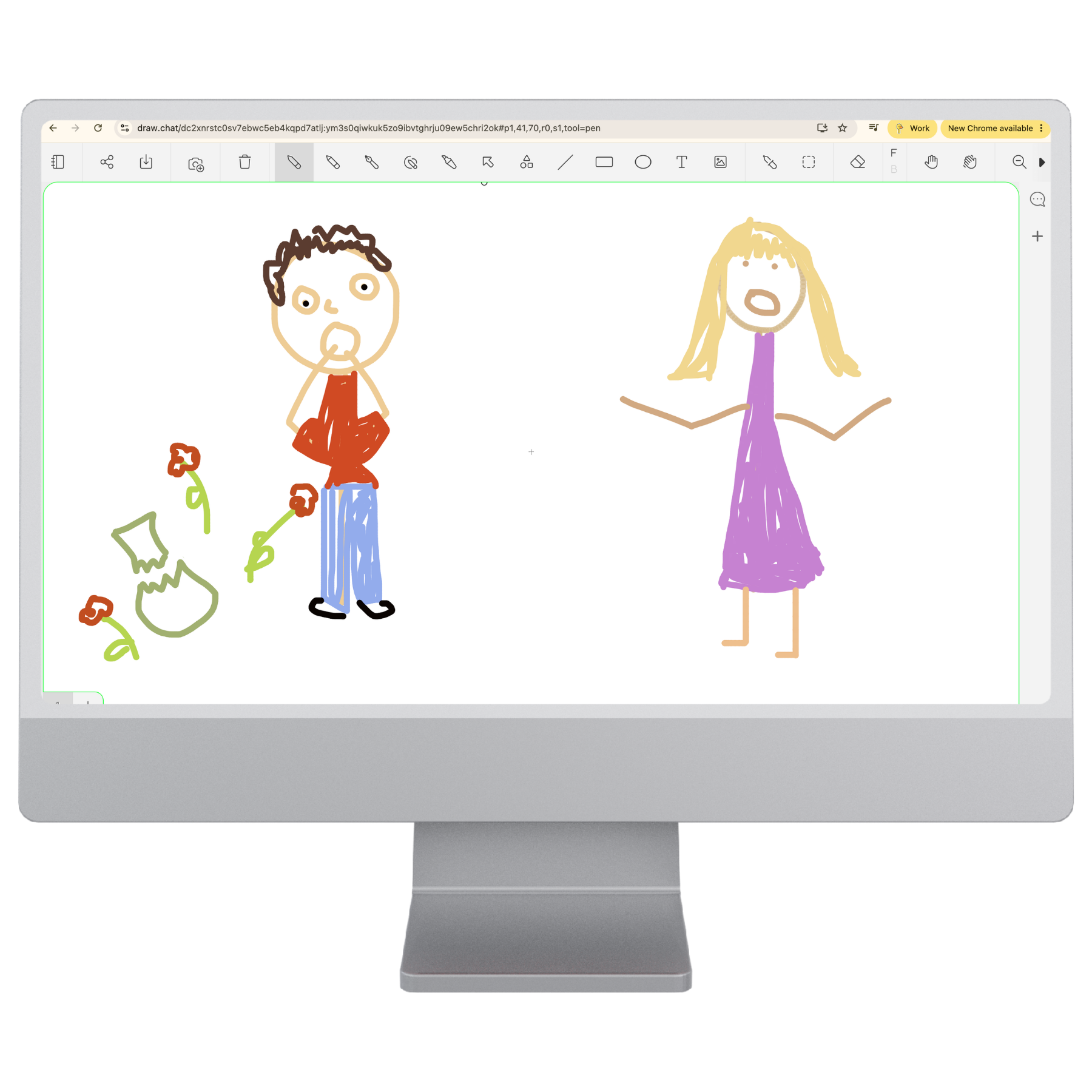
Kids pick a feeling, draw it on a shared whiteboard, and you guess! Because the child chooses the feeling, they often pick the one they're carrying that day. The drawing gives them a way to show what happened without having to bring it up themselves.
Why the Child Chooses
When kids pick their own feeling to draw, they usually choose what feels most familiar or most present. A child who is upset about something with a parent might pick mad and draw the moment it happened. The game opens a door to a hard conversation, and the child decides when to walk through it. That sense of control makes it feel safer to share.
Get Ready
Open the free whiteboard and send your client the board link in the session chat. No account is needed.
Have the feelings list ready to screen-share or send.
Pick the list that fits your client: Little Ducks, Big Ducks, or both.
How to Play
Screen-share the feelings list.
Your client secretly picks one feeling. No saying it out loud!
Stop sharing so the whiteboard fills the screen.
Your client draws the feeling: a face, a body, or a moment when someone feels it. No words or letters!
You guess the feeling.
Ask one of the "Talk About It" questions below.
Switch turns: you pick a feeling and draw, and your client guesses.
Talk About It
After each drawing, pick one or two:
"When was a time you felt this way?"
"Where do you feel this feeling in your body?"
"What do you usually do when you feel this way?"
"What would help someone who feels like this?"
"Was this one easy or hard to draw? Why?"
"Who could you tell if you felt this way?"
If the drawing shows a real moment, follow it. Try: "Tell me about your picture. What's happening here?" You don't have to finish the game. If a drawing opens up something real, that's the session.
Ways to Play
Make it easier: The clinician draws and the child guesses.
Make it harder: Draw only the situation, no faces allowed!
Speed round: Give each drawing 60 seconds.
Family session: Everyone takes a turn drawing and answering. Use emotions that you are focusing within the family
Clinician Tips
Notice what they pick. If a child picks the same feeling round after round, or always skips one, that's information.
Don't push the story. If they draw mad but don't want to explain, try: "Looks like a big mad. I'm here if you ever want to tell me about it." Then keep playing.
Take your turn too. When you draw, model a feeling with a simple, appropriate example from your own life.
Keep it private. Online whiteboards are general tools, not HIPAA platforms. Keep names and identifying details off the board, and close it when you're done.
For Younger Kids or Hesitant Kids
Some kids can't read the feelings list yet. Others feel too shy to draw alone while you watch. Try one of these:
Draw Together
Draw a line down the middle of the whiteboard. You each pick a feeling and draw at the same time on your own side. Then you take turns guessing each other's feeling. Drawing side by side takes the spotlight off the child, which helps kids who freeze up when someone is watching.
Take Turns
You go first and model it. Draw a simple feeling (a big smile for happy) and think out loud: "I'm going to draw happy. Happy looks like a big smile, and maybe the sun." Then hand the turn to the child. Seeing you go first shows them there's no wrong way to draw a feeling.
Faces Instead of Words
For pre-readers, draw 4–5 simple faces at the top of the whiteboard (happy, sad, mad, scared, silly) and say each one out loud together. The child points to or circles a face to pick it.
Say It Out Loud
Read the feelings list aloud and let the child whisper their pick to a stuffed animal or pet, or keep it "in their head." It still feels secret and fun.
Copy Me
For the youngest kids (4–5), skip guessing. You draw a feeling face, and the child copies it on their side of the board. Then name the feeling together and act it out.
Clinician tip: Shy kids often open up more when the attention isn't on them. Drawing at the same time, or letting them guess first, lowers the pressure. If a child doesn't want to draw at all, offer to be their "hands": they tell you what to draw, and you draw it.