What Makes You Feel…
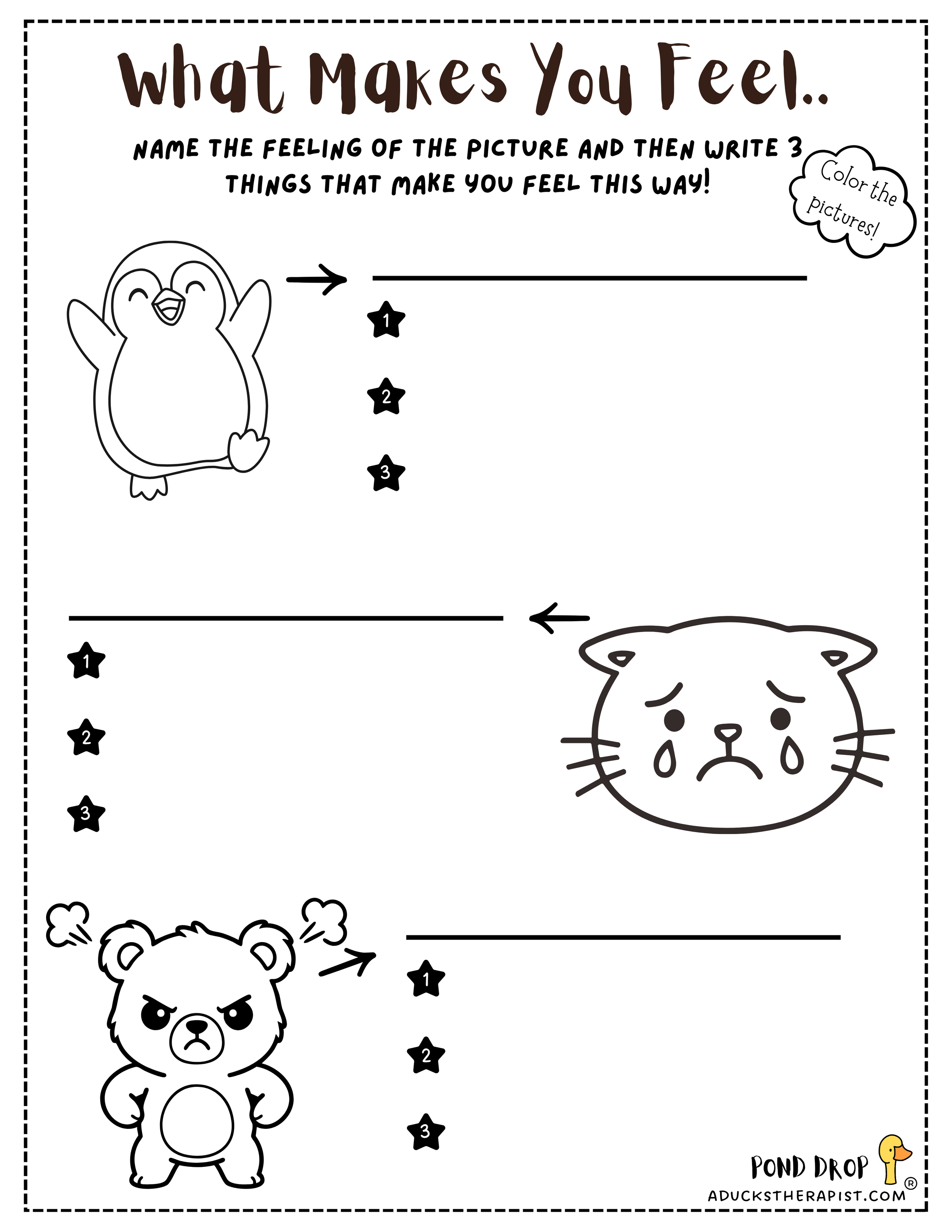
Ages: 6–10 · Time: 45–50 min · You'll need: pencil, crayons, sticky notes or index cards
Session goal: The child links feelings to the real situations that cause them, the first step in understanding triggers.
Why it helps
Feelings have causes. Knowing why we feel something is the bridge between naming a feeling and doing something about it. This is the start of the trigger → feeling → action chain used in CBT.
Patterns become visible. Listing three things per feeling shows kids (and you) where hard feelings come from: school, siblings, bedtime, friends.
Balance matters. Starting with happy before sad and mad keeps the page from feeling like an interrogation, and it gives you a list of resources to lean on later.
It's quick assessment. In 10 minutes you learn a lot about the child's world.
Session flow
Check in (5 min): One Word Check-In.
Warm up: Thumbs Up, Thumbs Down (5 min). Call out situations ("Losing a game," "Pizza for dinner," "Your sibling takes your toy"). The child shows how they'd feel with a thumb, then names it.
Worksheet (15 min). Name the feeling for each animal (happy penguin, sad cat, angry bear). Then list 3 things that make you feel that way. Kids can draw instead of writing. Do happy first.
Bring it to life: Feeling Sort (10–15 min). Write each answer on its own sticky note. Mix them up, then sort them into happy, sad, and mad piles together. Then ask, "Which of these can we change? Which can't we change?" and sort again.
Close (5 min): Choose one "happy" item to do more of this week. End with something from the happy list if you can (a joke, a game).
Questions to ask
"Which one of these happens the most?"
"When the angry one happens, what do you usually do?"
"Is there anything on the sad list that someone could help with?"
"Does anything make you feel more than one of these?"
"What would a grown-up you trust say if they saw this list?"
Therapeutic thoughts
Notice the people. If the same person shows up on the sad or mad lists (a sibling, a parent, a classmate), gently explore it.
Empty lists matter too. A child who can't think of anything that makes them happy may be struggling more than they let on. Follow up on mood, sleep, and interest in activities, and screen for depression if it fits.
Safety disclosures. If a child writes something that suggests harm or danger ("when Mom's boyfriend comes over"), pause the activity and follow your mandated reporting and safety steps.
Keep the happy list. It's a ready-made coping menu for Month 7.
Adapting it
Ages 5–6: Draw one thing per feeling instead of three. Scribe for them.
Ages 9–10: Swap the animals for harder words like frustrated, disappointed, and proud. Add a fourth column: "What I can do when this happens."
Groups: Share one answer each and see who else has it on their list. Kids love finding out they're not the only one.
Take-home practice
Bring back one more thing that made you feel happy, sad, or mad this week, and add it to the page next session.