Ages 5–9 · 5–10 minutes · Pencil or crayons
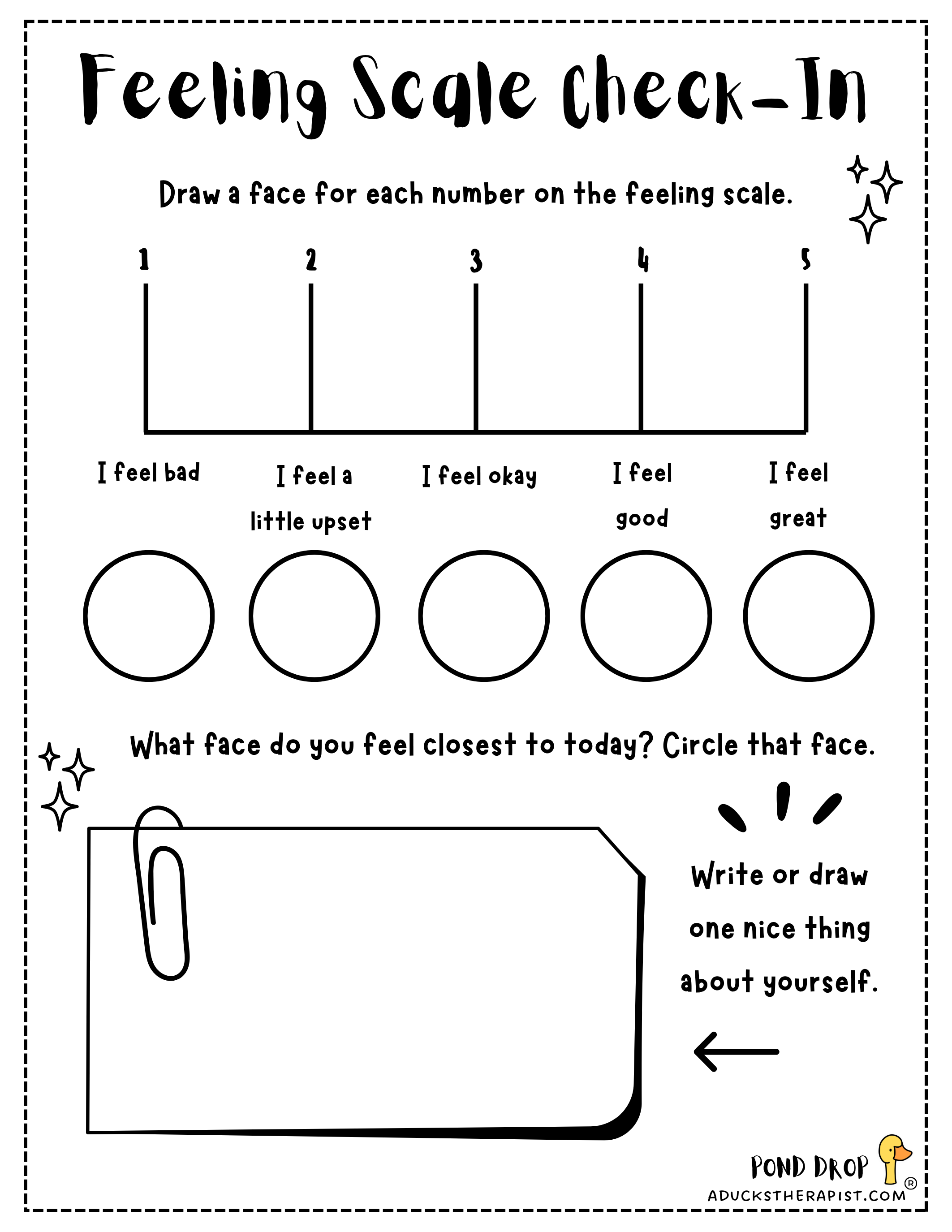
Kids draw their own face for each step of a 1–5 feeling scale. Then they circle the face closest to how they feel today and write or draw one nice thing about themselves.
Why it works: Most feeling scales give kids faces someone else drew. Here the child builds the scale, so every face means something to them. You also see how they picture “I feel bad” next to “a little upset,” which tells you how well they can tell big feelings from small ones. That’s a core part of emotional literacy. A 1–5 rating is also the simplest version of the scaling questions used in CBT and solution-focused work, and it gives you a number you can track week to week. The last prompt ends on a strength, so a kid who circles a 1 doesn’t leave the check-in stuck there.
How to use it
Read the five labels together. For pre-readers, read them aloud and act each one out.
Have the child draw a face in each circle. There’s no right way to draw a feeling.
Ask them to circle the face closest to how they feel today.
Finish with the nice-thing note. Drawing it counts.
Follow-up questions
“Tell me about your face for 1. What does a 1 feel like in your body?”
“You picked a 3 today. What would make it a 4?”
“What happened that made it a 3 and not a 2?”
“When was the last time you felt like a 5?”
“Who else would say that nice thing about you?”
What to watch for
Faces that look almost the same across the scale. The child may not be able to tell feeling sizes apart yet, which makes a good vocabulary goal.
A 1 week after week, or a sudden drop from their usual number. Check in more closely, and think about whether a screener makes sense.
A 5 every time when you know things are hard. Some kids circle what they think you want to see, so say out loud that low numbers are welcome here.
A child who can’t think of one nice thing about themselves. Help them find one without forcing it, and make a note. It’s useful information about self-esteem.
Adapting it
Little Ducks (4–5): Use only 1, 3, and 5. Draw the faces while they tell you what each one looks like, and write the nice thing for them.
Big Ducks (8–9): Have them write their own feeling word under each face, or stretch it to a 1–10 scale on the back.
Extend it
Copy the child’s finished scale and reuse it every week so they only need to circle a face. Their numbers over time make an easy progress chart for notes and parent updates.
In a parent session, ask the parent which face they think their child would pick, then compare answers.
Save the nice-thing notes in a folder or jar, and read them back together on a 1 day.