Rainbow Of Brave
How to Use It
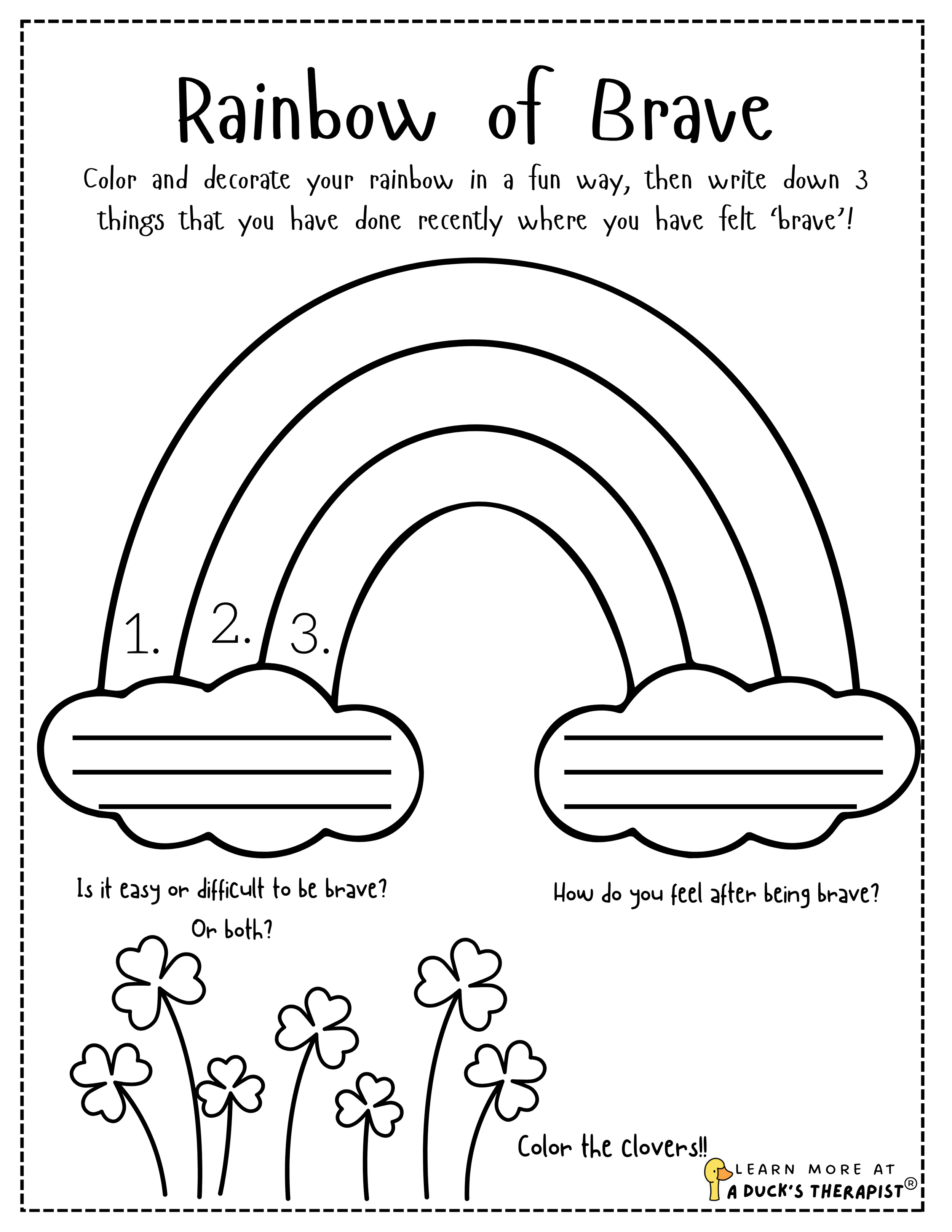
Introduce bravery with a quick psychoeducation moment: being brave doesn't mean not feeling scared — it means doing something even when you do. Let them color first before writing. If they're stuck identifying brave moments, offer: "Even small things count — saying hi to someone new, going to the nurse, trying something hard at school." After writing, process the cloud prompts together. Use the clovers as a celebration: "Color one for each brave thing!"
Works well mid-to-late session after rapport is established, or as a between-session homework tool.
Guiding Session Questions
Opening:
If I asked your best friend what the bravest thing you've ever done is, what do you think they'd say?
Can you think of a time this week — even something tiny — where you did something even though part of you was nervous?
What does brave feel like in your body right before you do something scary?
During the activity:
Tell me about brave moment number one. What was happening? Who was there?
Did you know you were being brave in that moment, or did you only realize it later?
Which one — 1, 2, or 3 — was the hardest? What made it the hardest?
Processing the clouds:
Looking at your three brave things — do you notice anything they have in common?
You wrote that bravery is [easy/difficult/both] — can you tell me more?
How do you feel right now, having written these down?
What would brave-you say to scared-you when you're facing something hard next time?
Closing:
What's one situation coming up soon where you might need to find your brave again?
Clinical Notes
For kids with trauma histories, bravery narratives can unexpectedly activate shame ("Why wasn't I brave enough to..."). Watch for avoidance, minimizing, or affect shifts and redirect gently to present, manageable moments. Great parent bridge tool — encourage parents to ask about the worksheet at home and add to the brave list together.
Therapy Theories
CBT — Kids identify concrete evidence of their own courage, directly challenging distorted self-beliefs like "I can never do anything scary." It functions like a mini thought record.
Positive Psychology / Strengths-Based — Rather than focusing on fears or deficits, this spotlights what the child has already accomplished. Bravery is one of Seligman's 24 character strengths. Naming it builds self-efficacy.
Narrative Therapy — Many anxious kids carry a dominant story: "I'm scared of everything." This creates a counter-narrative — a "brave story." They become the author of a new identity chapter.
ACT — ACT defines courage as taking valued action in the presence of fear, not the absence of it. The question "Is it easy or difficult? Or both?" is a perfect ACT moment — it normalizes fear and action coexisting.
Art Therapy — Coloring first lowers defenses and activates sensory engagement, warming kids into the reflective writing naturally.