Clover Calm-Down
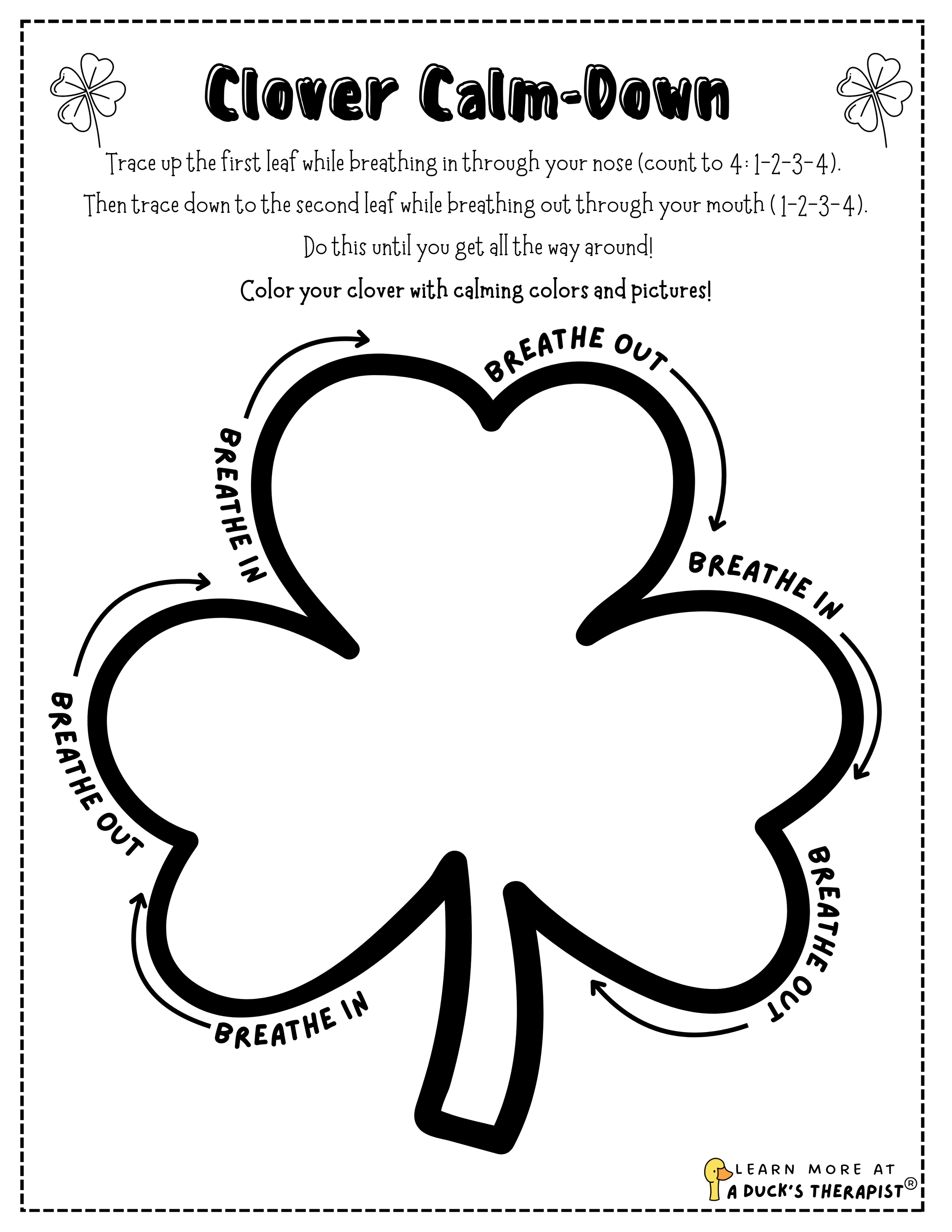
Click to download PDF
When kids are dysregulated, the downstairs brain — the limbic system and brainstem — is running the show. Slow, paced breathing is one of the fastest ways to send a "safe" signal back up to the thinking brain.
The Clover Calm-Down uses a 4-count inhale / 4-count exhale pattern traced around each leaf of the clover. That equal-ratio breathing helps regulate the autonomic nervous system by extending the exhale just enough to engage the parasympathetic response — essentially, it tells the body: you're okay, we can slow down now.
And the tracing? That's intentional too. The physical act of finger-tracing gives the brain a concrete, sensory anchor — something to focus on besides the big feeling. It's a gentle way to move from a reactive to a regulatory state.
How to teach it to kids
The beauty of this tool is that it's low-barrier and high-engagement. Here's how to introduce it:
1: Start with curiosity, not correction
Introduce it before a hard moment, not in the middle of one. This works way better than introducing a new skill during a meltdown.
2: Do it together first
Co-regulation is the foundation of self-regulation. When you breathe with a child, your calm nervous system helps anchor theirs. Put your finger on the clover, too. Count out loud together. Let them see you slow down.
3: Let them color it first
Before using it as a coping tool, let kids color the clover with calming colors. This builds buy-in and ownership — plus it's a regulatory activity in itself. Ask: "What colors feel calm to you?"
4: Practice when calm, use when big
The more a child practices this breathing in a neutral moment, the more accessible it becomes when emotions are high. Repetition builds the neural pathway. Think of it as training for the hard moments.
5: Name what they notice
After finishing the clover, pause and ask: "What do you feel in your body now?" This builds interoceptive awareness — helping kids start to connect breathing with actual physical shifts. Even "I don't know" is a valid answer worth exploring gently.
Ages 4–6
Focus on the physical trace only. Skip the counting — just say "breathe in... breathe out" as you guide their finger. Sensory engagement first.
Ages 7–10
Add the counting (1-2-3-4). This age group often loves the "challenge" of keeping count and finishing all three leaves. Make it feel like an accomplishment.
Ages 11+
Add the "why." Briefly explain what's happening in the nervous system. Tweens and teens are much more likely to use a tool when they understand the mechanism behind it.