Feelings Pictionary
Feelings Pictionary
Ages 5–12 · 2+ players
You'll need: the Feeling Cards sheet, crayons or markers, scissors, and paper or a whiteboard for drawing
Pull a card, draw the feeling, and see if your partner can guess it! This low-prep game helps kids build a feelings vocabulary by connecting emotions to faces, bodies, and real-life moments.
Why It Works
Drawing makes feelings concrete. To draw a feeling, kids have to think about what it looks like: the face, the body, and the situations that cause it. That deeper processing helps new feeling words stick.
Guessing builds empathy. The guesser practices reading someone else's emotional cues, an early perspective-taking skill.
Play lowers defenses. Kids who shut down when asked "How do you feel?" will happily talk about feelings when it's a game.
It turns into real conversation. The question after each round connects the feeling word to the child's own life, which is where the therapeutic work happens.
The Cards
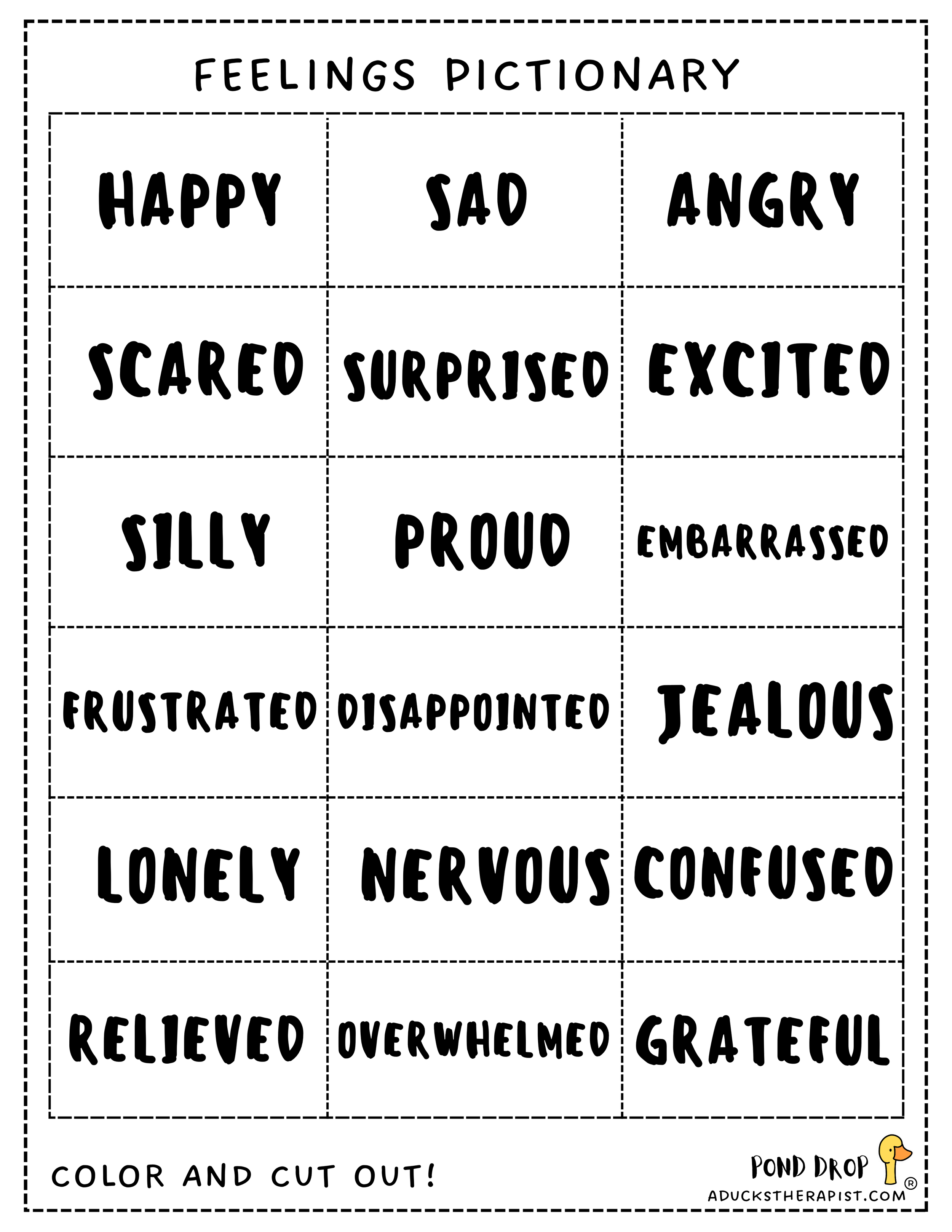
Starter feelings (ages 5+): Happy · Sad · Angry · Scared · Surprised · Excited · Silly · Proud · Embarrassed
Big feelings (ages 8+): Frustrated · Disappointed · Jealous · Lonely · Nervous · Confused · Relieved · Overwhelmed · Grateful
Blank cards: Make your own!
Get Ready
Color the cards, cut them out, and pick only the cards that fit your client. You don't need to use them all. A good deck is 6–10 cards that are challenging but still doable.
Little Ducks (4–7): Start with 4–5 starter feelings like Happy, Sad, Angry, Scared, and Silly. Add more as they get the hang of it.
Big Ducks (8–12): Mix in big feelings. Start with 2–3, then add more as they're ready.
Any age: Leave out a card if it might hit too close to home right now, like Lonely for a child who was just left out or Scared after a frightening event. Save it for when you're ready to talk about it on purpose.
How to Play
Mix your chosen cards and place them face down.
Take turns pulling a card. Don't show anyone!
Draw something that shows that feeling: a face, a body, or a moment when someone might feel it. No words or letters allowed!
Your partner guesses the feeling. Stuck? Act it out for a hint.
After each round, ask: "When was a time you felt this way?"
Ways to Play
Make it easier: The grown-up draws and the child guesses.
Make it harder: Draw only the situation, no faces allowed! For example, a birthday party for excited or a spilled lunch tray for embarrassed.
Charades version: Act out the card instead of drawing it.
Speed round: Set a 30-second timer for each drawing.
Group or family session: Play in teams, and everyone answers the "When was a time…" question.
Telehealth: Draw on a whiteboard app or hold paper up to the camera.
Questions to Ask After Each Round
"When was a time you felt this way?"
"Where do you feel this feeling in your body?"
"What do you usually do when you feel this way?"
"What would help someone who feels like this?"
"Was this one easy or hard to draw? Why?"
Clinician Tips
The question after each round is where the real work happens. If a child can't think of a time, try: "When might a kid your age feel this?"
Watch for cards a child avoids or rushes past. That can show you what's hard to talk about.
Use the look-alike pairs. Some big feelings look alike on purpose: frustrated vs. overwhelmed, nervous vs. confused, disappointed vs. lonely. When a guess is close, ask: "What's the difference between those two?"
Take your turn too. When you draw, model a feeling and share a simple, appropriate example from your own life ("I felt nervous before my first day here").
Keep the drawings. A child's drawings show you how they see each feeling, and you can bring them back in future sessions.
Keep It Going
Let the child keep their deck and play at home with a parent or sibling.
Add a new card each month as you learn new feeling words (try this month's Alphabet of Feelings letters).
Make a "Feelings Gallery" by hanging the best drawings on the wall.