These Are My Emotions
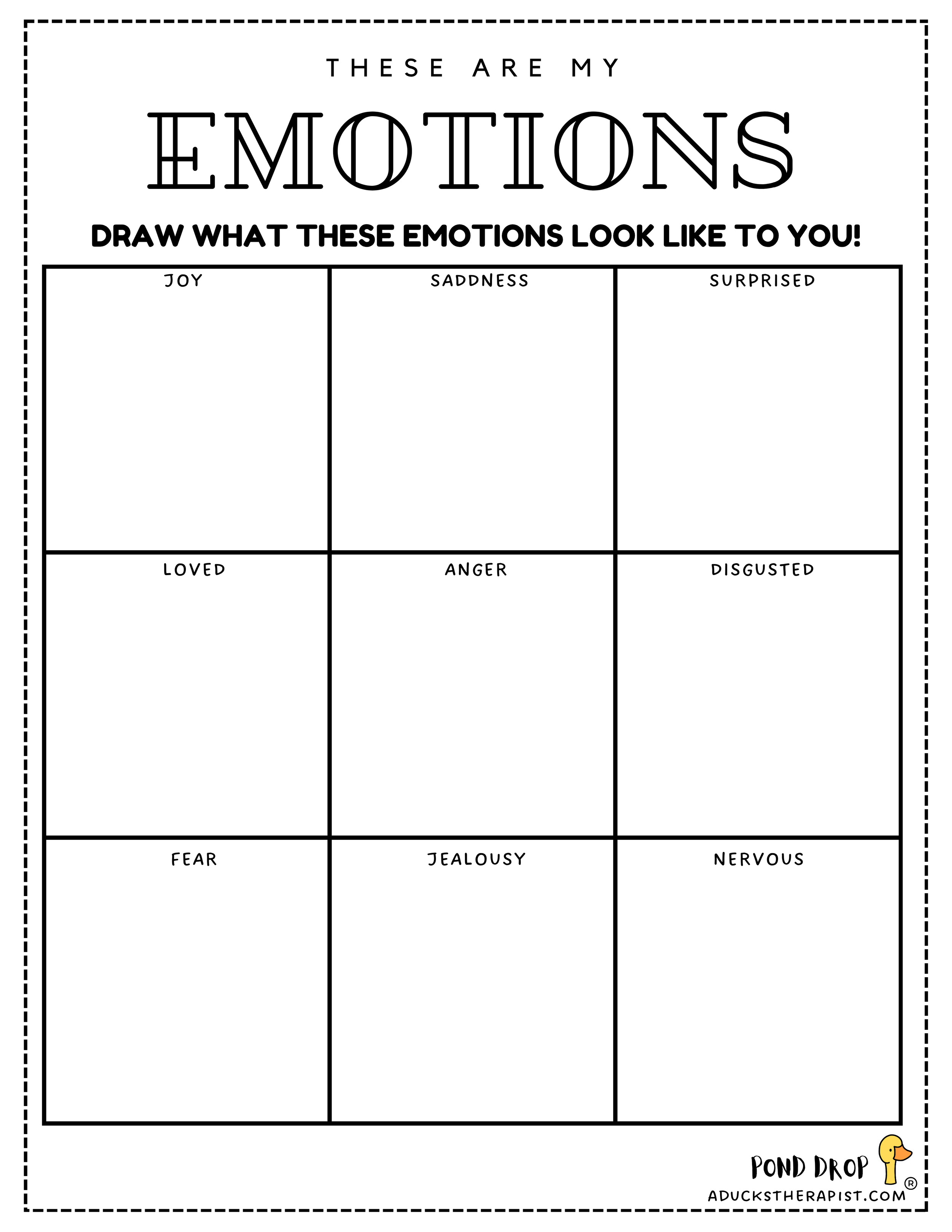
Ages: Set A 5–9 · Set B 6–12 · Time: 45–50 min · You'll need: crayons or markers, a mirror (optional), feelings faces or the Wheel of Emotion
Session goal: The child builds a personal picture dictionary of feelings and connects each word to what it looks like for them.
Why it helps
Naming tames. Putting feelings into words lowers emotional intensity (affect labeling). Kids need the words before they can use them under stress.
Personal, not textbook. Asking what a feeling looks like to you turns abstract words into something concrete and remembered. Drawing helps kids encode a word through images and movement, not just language.
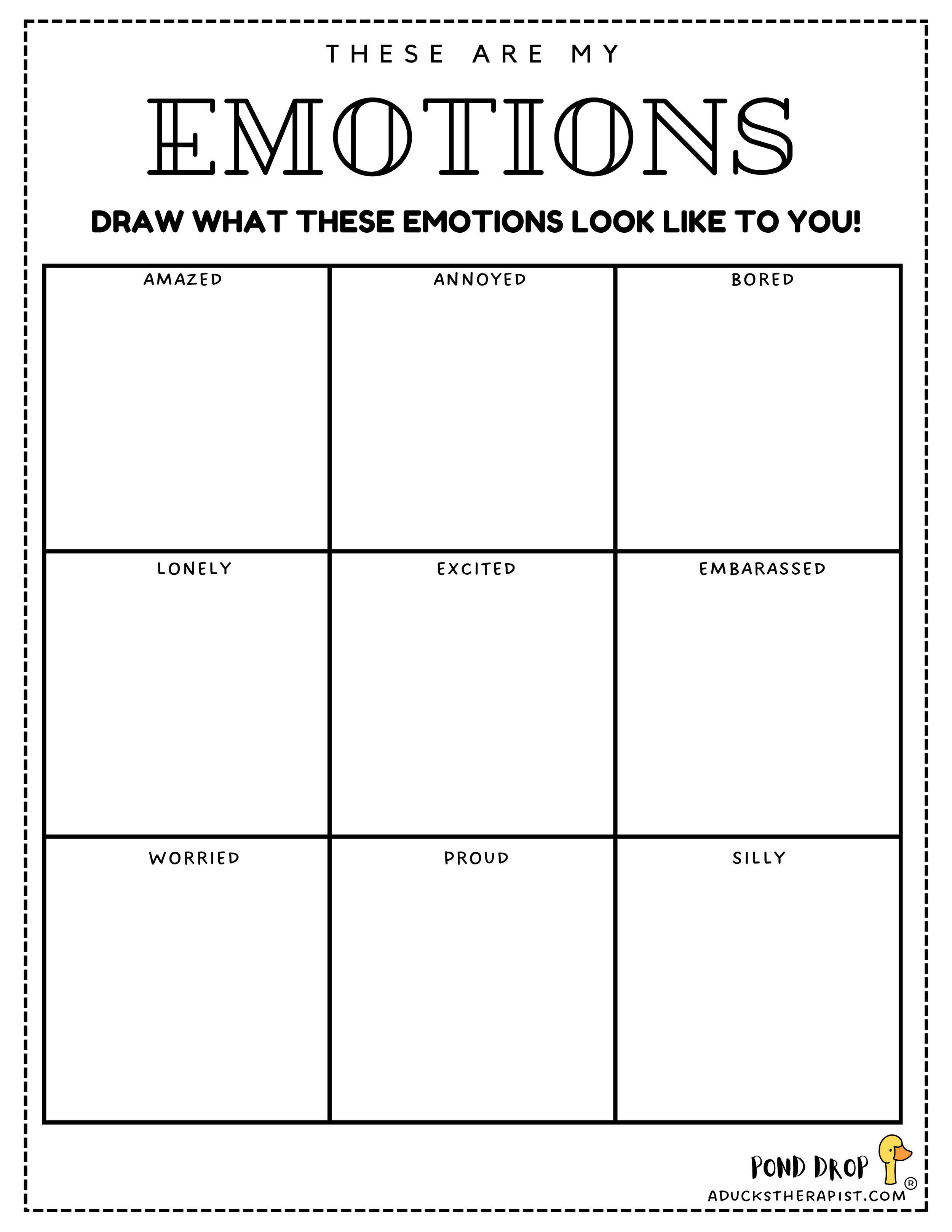
Set A builds the foundation; Set B builds granularity. Set A covers core emotions. Set B adds subtler words (annoyed, embarrassed, proud, bored) that help kids tell close feelings apart, a skill linked to better coping later on.
It's an assessment in disguise. Which boxes a child fills fast, skips, or struggles with tells you which feelings are familiar and which are hard.
Session flow
Check in (5 min): Color Crayon or Stick Figure Check-In.
Warm up: Feelings Faces in the Mirror (5–10 min). Take turns making faces for joy, anger, fear, and surprise in a mirror or at each other. Guess each one. Notice eyebrows, mouths, and shoulders together.
Worksheet (15 min). Pick 4–6 boxes to start; you don't need all 9 today. For each one, ask: "What does this one look like for you?" They can draw a face, a body, a place, a color, or a moment. Let them skip any box.
Bring it to life: Feelings Charades (10–15 min). Cut out or point to the boxes they drew. Take turns acting one out with no words while the other guesses. After each guess, ask, "When was the last time you felt that?"
Close (5 min): "Which feeling was the easiest to draw? Which was the hardest?" Pick one word to notice at home this week.
Questions to ask
"Where do you feel this one in your body?"
"What color would this feeling be?"
"Is this a feeling you have a lot, sometimes, or almost never?"
"Which of these feelings do grown-ups in your house show most?"
Set B: "What's the difference between annoyed and angry? Lonely and sad? Embarrassed and nervous?"
"Which feeling would you like to have more of? Less of?"
Therapeutic thoughts
Skipped boxes are information. A child who won't touch "anger" or "jealousy" may have learned that those feelings are bad or unsafe. Normalize gently: "Every person has every one of these feelings."
Drawings of real events matter. If a child draws a specific scene ("this is when Dad yelled"), slow down and get curious. That's the session now.
Disgust and jealousy are big ones to name. Kids often feel shame about them. Saying "these are normal feelings that tell us something" is a gift.
Don't correct. If their "joy" looks sad to you, ask about it.
Adapting it
Little Ducks (5–6): Do 3 boxes only (joy, sadness, anger). You can draw the faces while they tell you what to draw.
Big Ducks (10–12): Use Set B and add a word or a memory under each drawing. Ask them to rank the 9 from "easiest to show" to "hardest to show."
Groups: Each child draws one box, then the group guesses the feeling from the drawing alone.
Take-home practice
Pick one feeling from the page. Notice one time it shows up this week and tell a grown-up (or bring it to next session).