Peaceful Place
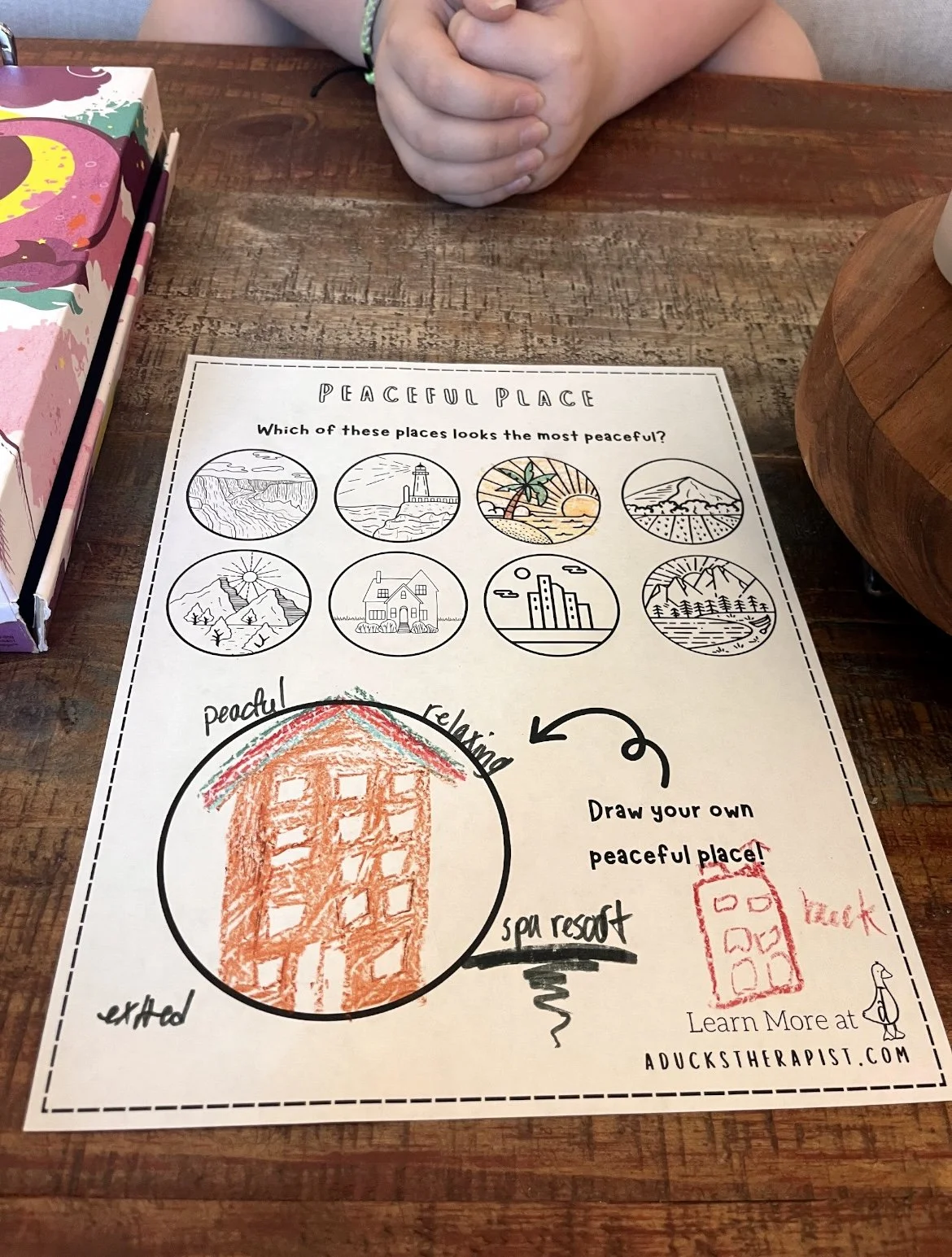
When kids visualize their peaceful, safe, calm place - whether it's a real location like their bedroom or grandmother's house, or an imagined space like a magical forest or cozy treehouse - they're activating the parasympathetic nervous system, which naturally counteracts stress responses and promotes relaxation.
This technique is particularly effective for children because their imaginations are naturally vivid and powerful. Unlike adults who may struggle with visualization, kids can often transport themselves mentally to their peaceful place with remarkable detail and emotional connection. The more senses they engage in their imagery - imagining not just what they see, but what they hear, smell, and feel - the more real and effective the calming response becomes.
This two-part worksheet first presents eight illustrated circular vignettes of potentially peaceful places (canyon, lighthouse, beach, mountain, valley, house, city, forest) for selection, then provides a blank circle for children to draw their own personal peaceful place. The variety of options validates different preferences while the creative component personalizes the concept.
Age Range: 6-16 years
Therapeutic Objectives:
Identify personal associations with peace and calm
Develop visualization skills for emotional regulation
Create mental "safe place" for grounding or anxiety management
Build self-awareness about environmental preferences and needs
Practice guided imagery preparation
Normalize that peace looks different for different people
Processing Questions:
Tell me about your peaceful place. What's happening there?
Are you alone in your peaceful place, or is anyone with you?
What can you see in your peaceful place? What colors?
What sounds do you hear? (or is it silent?)
How does your body feel when you imagine being in your peaceful place?
Is this a real place you've been, or one you imagined?
Could you go to this place in real life, or is it only in your imagination?
When might you want to think about your peaceful place?
What makes this place peaceful instead of some other place?
Therapy Theories:
Trauma-Focused Cognitive Behavioral Therapy (TF-CBT): Safe place visualization component
Mindfulness-Based Approaches: Present-moment awareness and grounding
Guided Imagery: Creates a foundation for visualization practices
EMDR (Eye Movement Desensitization and Reprocessing): Establishes resource/safe place